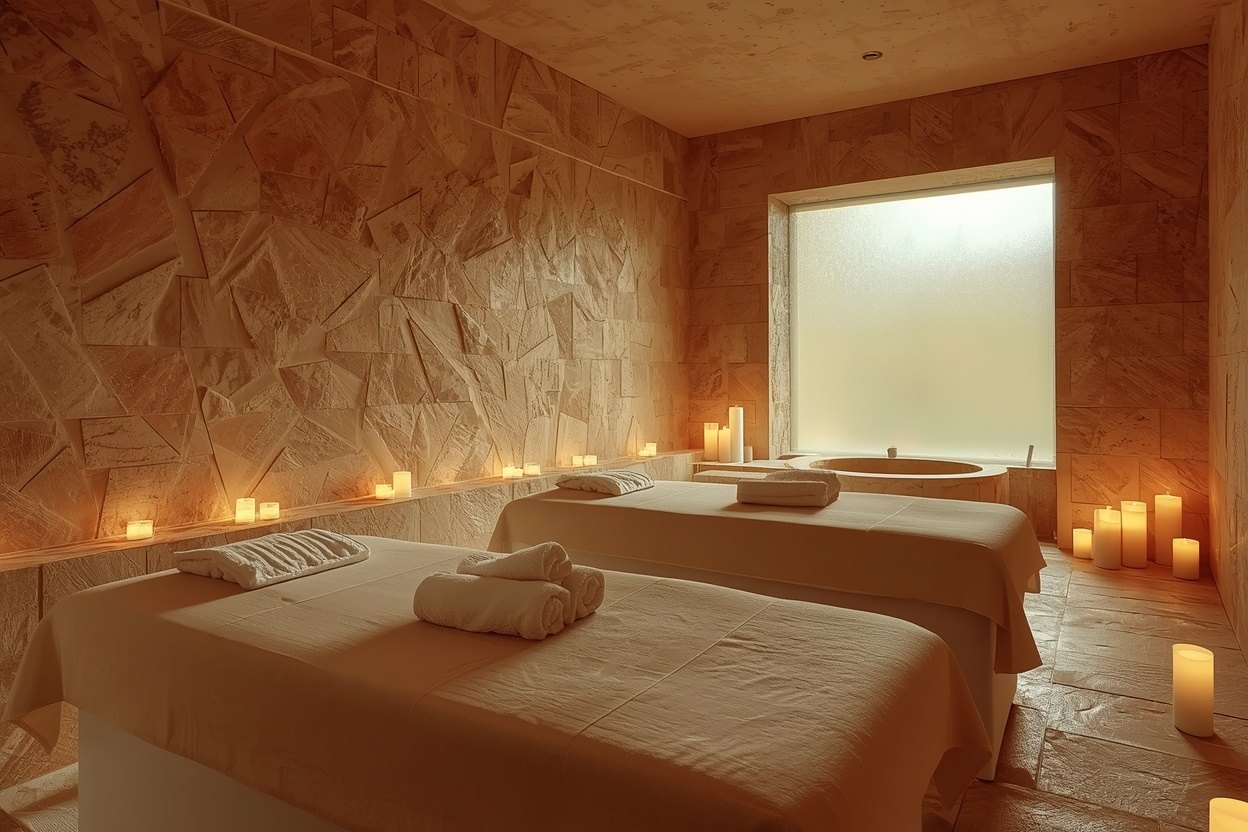
A spa break is meant to be the opposite of a sightseeing trip: slow breakfasts, an afternoon drifting between sauna, steam room and treatment room, and nothing on the itinerary you’d mind skipping. The trouble is that “spa” covers a lot of ground. At one hotel it’s a couple of massage rooms off a corridor; at another, a full floor of pools, heat rooms and relaxation lounges.
Our spa hotels listing is the place to compare. This guide covers what the listing includes, the difference between a city spa break and a resort spa week, and how to make sure you actually rest when you get there.
What gets a hotel onto the list
We include hotels whose property details mention spa facilities, a spa and wellness centre, a spa relaxation area or spa packages. That’s deliberately broad, so it captures both large wellness complexes and modest set-ups with a sauna and a treatment room. The listing tells you a hotel offers spa services; the photos, the hotel page and recent reviews tell you how much.
As of November 2026, the listing has 2,542 hotels. Those with guest reviews average 8.1 out of 10. Of the hotels with a star rating, 810 are five-star and 881 are four-star. Around 85% also list a sauna and 92% a restaurant, so a sauna is close to standard at spa hotels.
How to tell a proper spa from a token one
- Count the facilities. Sauna, steam room, hammam, indoor pool, relaxation room and treatment rooms. The more of these there are, the more a spa can fill an afternoon.
- Look for a relaxation room. Somewhere quiet to lie down after a treatment is what separates a spa from a massage service. If you can’t see one in the photos, ask.
- Check for a pool. On a winter break, a pool is what turns a spa into a place you can spend half a day. Hotels with an indoor pool narrows the search.
- Search the reviews. What guests say about the spa specifically is more useful than the overall score.
- Ask what’s included. Some hotels include the sauna and pool in the room rate and charge for treatments; others charge for spa entry too.
The hammam question
In Turkey, many spa hotels include a traditional Turkish hammam, and for a lot of UK visitors the scrub and foam massage ends up as the highlight of the holiday. If that’s what you’re after, go straight to hotels with a hammam so you know it’s part of the facilities rather than an optional extra somewhere nearby.
City spa break or resort spa week?
City: Istanbul and London
Istanbul has the most spa hotels in our listing, 502 of them. City spas tend to be compact but well run, and they suit a long weekend: museums and bazaars by day, a hammam and massage at dusk, then dinner. Start with spa hotels in Istanbul. Closer to home, London has 89 with an average guest score of 8.7, among the highest of any destination in the list. A night or two at one of the London spa hotels makes a theatre trip or a pre-Christmas shopping day feel like a proper break.
Resort: Side, Alanya, Antalya, Kemer
On the Turkish Riviera, the spa is part of a week-long stay. Side has the widest choice on the coast with 219 hotels, followed by Alanya (176), Antalya (173) and Kemer (121), with Marmaris (81) and Kuşadası (51) further west. Spa hotels in Side include many of the larger resorts. A resort spa comes into its own in spring and autumn, when the sea is cool or the weather turns and you want somewhere to spend a whole afternoon.
When to go
A spa break works in any season, but the timing shapes it:
- November to March: the best time for a city spa. Finishing a wet Istanbul day in the hammam, or escaping a grey London weekend, is exactly what these places are for.
- April, May and October: when a resort spa earns its keep. The weather is mild and the hotels are quieter, but the sea isn’t warm enough for everyone, so the spa gives the day a rhythm.
- June to September: on the coast, the spa becomes a late-afternoon retreat from the heat. Book treatments early, because summer slots go fast.
What to pack
Most hotels provide robes and towels, but not all. Bring flip-flops, swimwear, a hair tie and a book for the relaxation room. Leave jewellery in your room, as metal heats up in a sauna or hammam. If you’re pregnant, have a health condition or sensitive skin, tell the therapist before any treatment.
Book treatments before you travel
If the spa is the point of the trip, don’t wait until you arrive to book treatments. During school holidays, bank holiday weekends and the festive season, the popular slots go quickly. Once your room is booked, email the hotel for its treatment menu and reserve what you want for specific days. That matters even more for couples’ treatments, which need two therapists at once.
Find the quiet hours
At big resorts, the spa is busiest in mid-afternoon when guests come in from the beach and pool, and again before dinner. For a calmer session, try first thing in the morning or during dinner service. Many hotels also restrict children in the spa to set hours; if quiet matters to you, ask what the rules are.
For complete peace: adults-only
If you want a break that’s entirely about rest, pair the spa with a hotel that doesn’t take children. Adults-only hotels suit couples, honeymooners and anyone taking a few days for themselves. The minimum age varies between hotels, so check before booking.
A quick comparison checklist
- Which facilities does the spa have: sauna, steam, hammam, pool, relaxation room?
- Is spa access included in the room rate, and which services cost extra?
- What are the opening hours and the rules for children?
- Can treatments be booked in advance?
- What do recent reviews say about the spa and its cleanliness?
Your next step
Decide whether you want a city weekend or a week by the sea, then shortlist a few options from our spa hotels listing and run them through the checklist above. For other ways to choose a stay, browse all our hotel themes.